The End of an Era for Next TV as Industry Veterans Prepare for a New Digital Landscape


The media landscape is undergoing a profound structural transformation as Next TV, a long-standing vertical dedicated to the business of streaming and telecommunications, concludes its current editorial chapter. This transition marks the departure of veteran journalists Daniel Frankel and David Bloom, whose "Next Text" column has provided industry analysis for years. As the publication pivots toward a curated newsletter model that removes original editorial content, the shift underscores a broader trend across digital media: the transition from traditional, staff-driven reporting to automated or light-touch aggregation, driven by the dual pressures of economic consolidation and the rapid integration of artificial intelligence.
A Chronology of Industry Consolidation
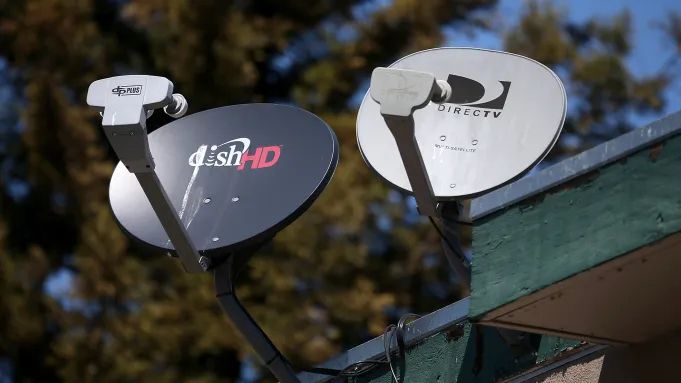
The news of the editorial shift at Next TV arrives against a backdrop of historic instability in the media and telecommunications sectors. This period has been defined by the aggressive consolidation of legacy television providers and the volatile evolution of the streaming market. For years, the potential merger between DirecTV and Dish Network has served as a central narrative of decline and desperation in the pay-TV industry.
DirecTV, currently holding approximately 11 million subscribers, and Dish Network, with just over 8 million, have spent years in on-again, off-again merger discussions. A potential combination would create the largest linear pay-TV entity in the United States, providing the scale necessary to negotiate more effectively with content providers. However, regulatory hurdles from the Department of Justice have consistently stalled such efforts, as the government evaluates the impact of reduced competition on consumer choice and pricing. Analysts suggest that regardless of the next federal administration, a merger is increasingly likely, potentially contingent upon conditions that require the combined entity to offer wholesale access to third-party providers. This would effectively turn the satellite giants into infrastructure conduits rather than exclusive content distributors.
The Streaming Paradox: A Challenging Business Model
While traditional pay-TV struggles to survive, the streaming sector—the industry’s supposed savior—is facing its own existential crisis. Dr. John Malone, a titan of the telecommunications industry and a key figure behind the architecture of modern media conglomerates like Warner Bros. Discovery and Charter Communications, recently offered a stark assessment of the current environment. During a discussion with analysts at MoffettNathanson, Malone characterized the streaming model as a "terrible business."
The fundamental issue, according to Malone, lies in the legacy decisions of media companies that now struggle to integrate on-demand services with linear television experiences. This fragmentation prevents the creation of the hybrid packages that consumers increasingly demand. Furthermore, the spiraling costs of sports rights—often exacerbated by competition from technology giants that are not beholden to traditional net neutrality regulations—threaten to erode the margins of established media companies. The primary opportunity, Malone argues, lies in international markets where hybrid models are being piloted with more success than in the saturated, high-cost U.S. market.

Technological Shifts and the Hardware Race
The hardware used to access this content is also reaching a critical inflection point. This week, the market saw renewed competition as Google and Roku unveiled high-end streaming devices designed to challenge the dominance of Apple TV. The new Google TV Streamer and the upgraded Roku Ultra both emphasize enhanced processing power, HDR10+, and advanced smart home integration.
This focus on hardware performance is not merely about consumer convenience; it is a response to the growing technical demands of modern applications. Recent beta launches, such as Fubo’s multiview feature on Roku devices, highlight the limitation of current hardware, as only the most robust processors can handle the simultaneous rendering of multiple video streams. Industry experts, including Daniel Frankel, have noted that the industry is nearing a ceiling where the limited memory and processing power of standard smart TVs and streaming sticks will impede innovation. Solutions such as Synamedia’s cloud-based processing, which offloads computational tasks from the device to the cloud, are expected to become increasingly vital as developers seek to build more sophisticated, data-heavy user interfaces.

Data Trends and the Future of Engagement
Recent studies by Wurl indicate that connected TV (CTV) viewing has reached levels comparable to the peak of the COVID-19 pandemic. However, the data also serves as a warning for content providers. As streaming services increase their ad loads to bolster revenue, they face a direct trade-off in audience retention. According to the study, every additional minute added to an advertising break results in a 4% decline in viewer retention. This "ad load" sensitivity suggests that the future of profitable streaming lies in high-value, light-touch advertising rather than the aggressive saturation models of the past.
The Role of Artificial Intelligence in Editorial Media
The media industry’s pivot is not limited to business models; it is fundamentally altering the nature of content creation. The London-based Evening Standard recently announced a move to a weekly publication schedule alongside significant staff layoffs. Most notably, the newspaper is exploring the use of AI to "revive" the voice of its former, long-deceased art critic, Brian Sewell. This development mirrors the broader industry trend where traditional editorial voices are being replaced by algorithmic approximations.

This shift has created a palpable sense of alienation among veteran journalists. The economic viability of the "creative class" is under pressure from several fronts: the automation of writing tasks, the consolidation of corporate media ownership, and a perceived devaluation of original reporting. In the current labor market, digital media companies are increasingly seeking to maximize productivity through low-cost, high-volume content, often setting compensation rates that make professional-grade journalism unsustainable.
Broader Implications for the Media Sector
The transition at Next TV is emblematic of a broader, more systemic shift. As media outlets move away from sustained, original editorial content toward automated newsletters and curated feeds, the industry risks losing the nuance and investigative depth that long-form, expert-led analysis provides. The pressure to reduce capital expenditures (CapEx) and operational costs is forcing media organizations to favor scalability over journalistic integrity.

As the industry moves forward, the primary challenge will be determining how to maintain audience trust in an environment where the line between human-authored insight and AI-generated content is increasingly blurred. For companies like Future plc and their competitors, the goal is clear: lower costs and higher digital engagement. For the journalists who have defined the sector for decades, the current moment represents a departure from the traditional newsroom routine toward an uncertain future.
The decline of the legacy "Next Text" format and the broader consolidation of media outlets suggest that the next phase of the media industry will be defined by technological efficiency. Whether these efficiencies can support the high-quality, reliable journalism that the public relies upon remains an open question. As the sector navigates this evolution, the focus will likely remain on the tension between the push for technological innovation and the preservation of the editorial standards that have historically served as the foundation of the media industry.